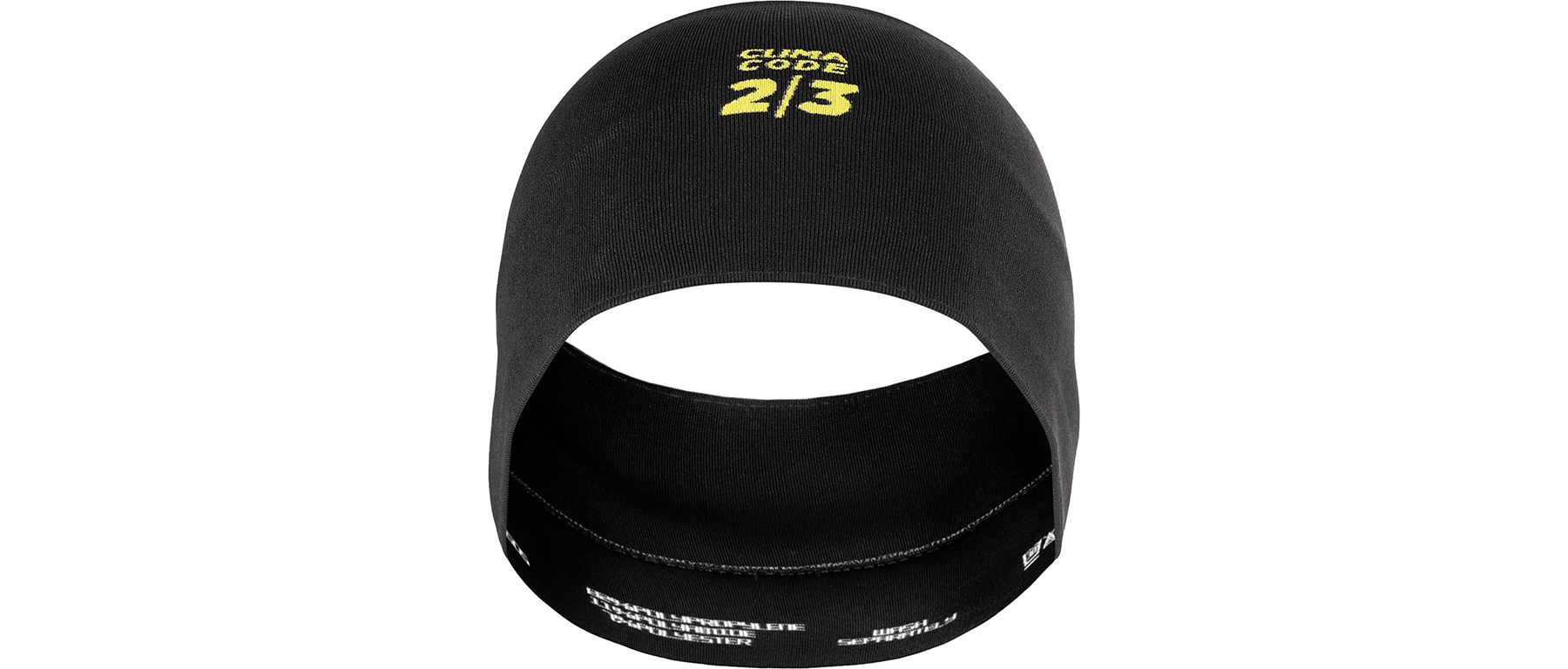
Transitional weather rides expose a gap in most headwear collections—skull caps trap too much heat once you're working, and bare skin under a helmet lets cold air find every vent hole the manufacturer designed into your lid. The Assos Spring Fall Headband targets exactly this in-between scenario, covering ears and forehead while leaving the crown of your head open for heat to escape. It's the kind of piece you grab when morning temperatures sit in the 50s but you know you'll be generating real heat an hour into the ride.
The headband uses Assos's RX EVO fabric, a brushed material that manages the dual role of blocking wind chill at your ears while moving moisture away from skin contact. The brushed interior sits against your forehead and ears with a soft hand, avoiding the clammy feeling that cheaper synthetic headbands develop once you start sweating. The fabric weight lands in that middle zone—enough substance to cut wind without creating a sauna effect under your helmet on sustained climbs.
Fit matters more with headwear than most cyclists appreciate until they get it wrong. A headband that bunches under helmet straps or creates pressure points at the temples turns a minor comfort piece into an annoyance you rip off mid-ride. Assos cuts the Spring Fall Headband to sit flat against the head with a slim profile that disappears under helmet retention systems. The coverage extends down over the ears without extra material flopping around, and the stretch in the fabric accommodates different head shapes without relying on aggressive elastic tension that creates headaches over long distances.... Read More
The single Blackseries colorway keeps things simple—black works with everything and doesn't show sweat marks or road grime the way lighter colors would. Width-wise, the headband provides enough coverage to protect ears fully while stopping below the crown, which is exactly where you want the boundary when body temperature rises. For riders who run hot, this design breathes better than a full cap while still protecting the areas most vulnerable to wind chill. For those who run cold, it layers under a helmet without interference, leaving room to add a cap on genuinely frigid days.
The practical use case here is the shoulder season ride—those spring mornings when you're not sure if arm warmers are overkill, or fall afternoons when the sun drops faster than expected. A headband takes up almost no space in a jersey pocket, weighs nothing, and solves the specific problem of cold ears without committing to full head coverage you'll regret once your heart rate climbs.