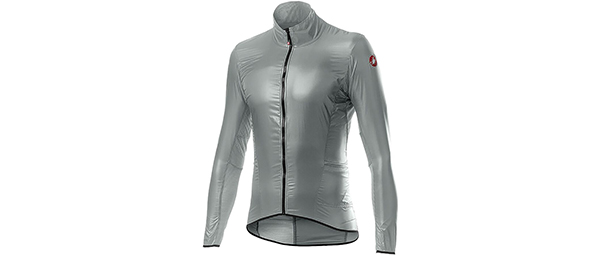
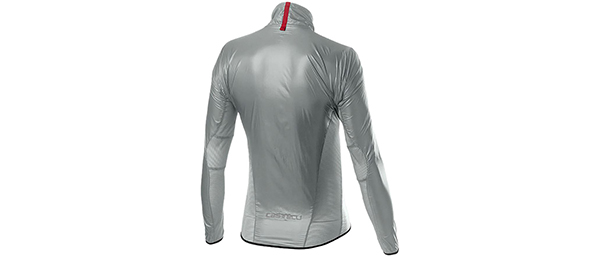
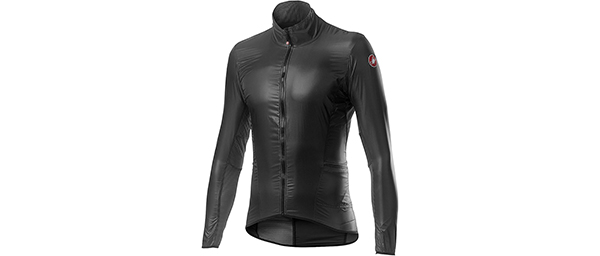
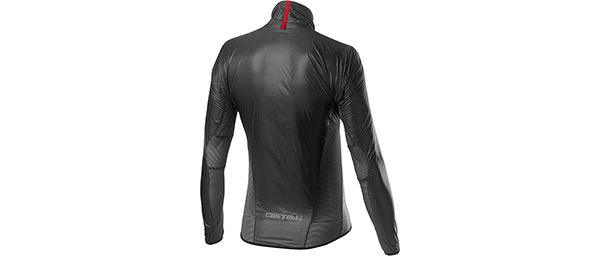
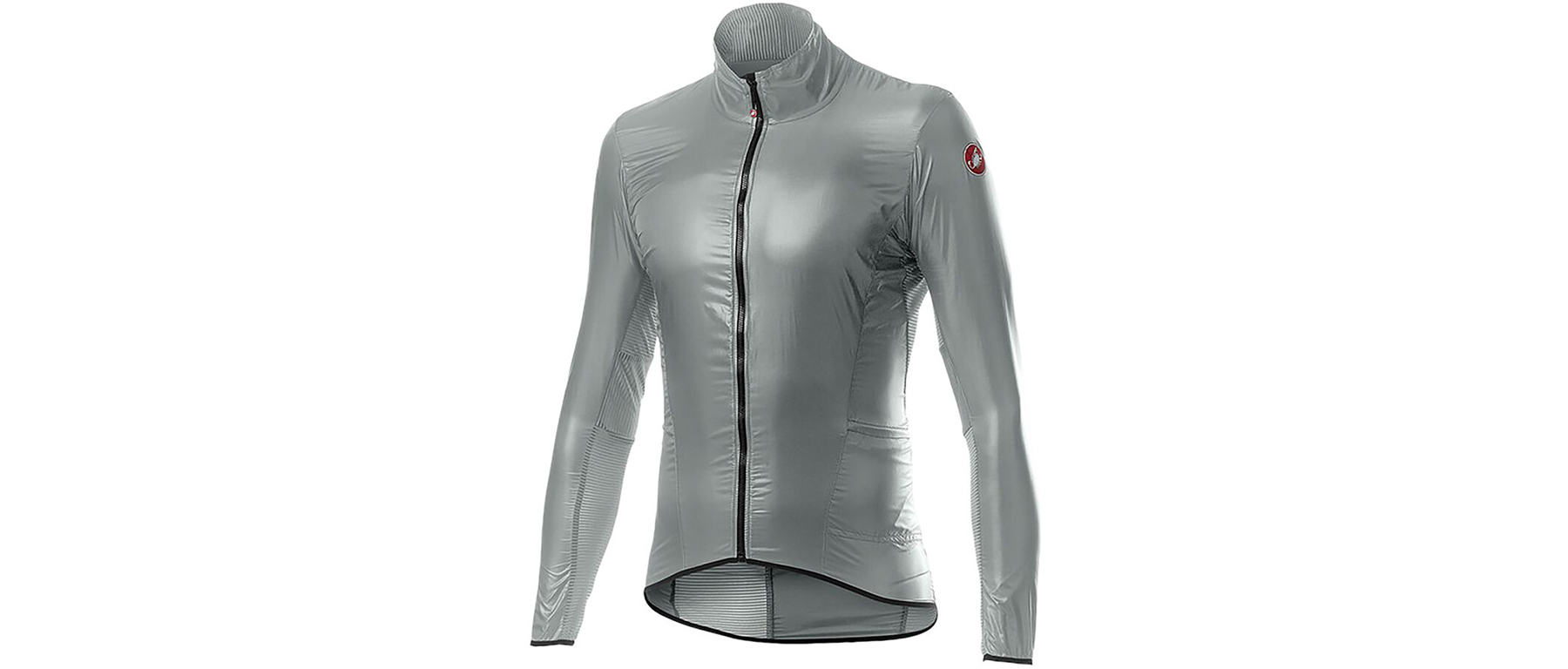
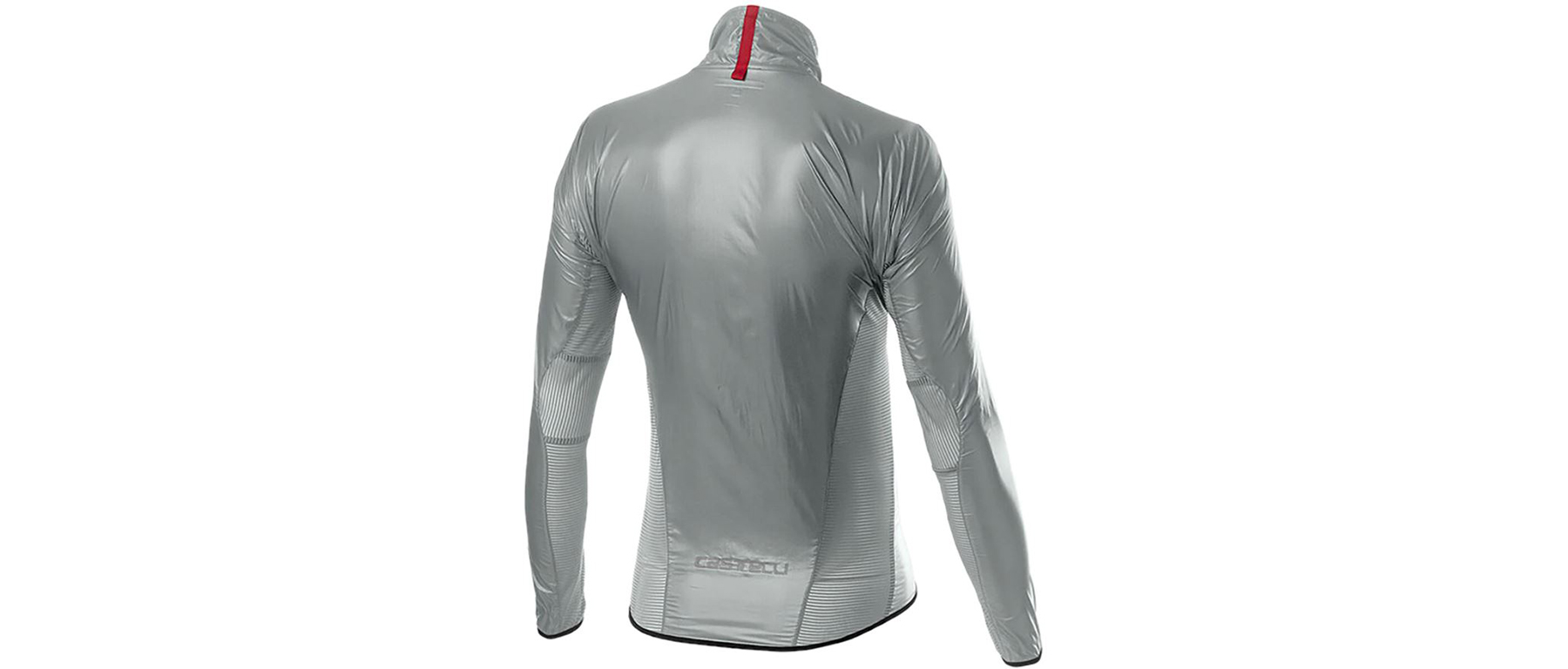
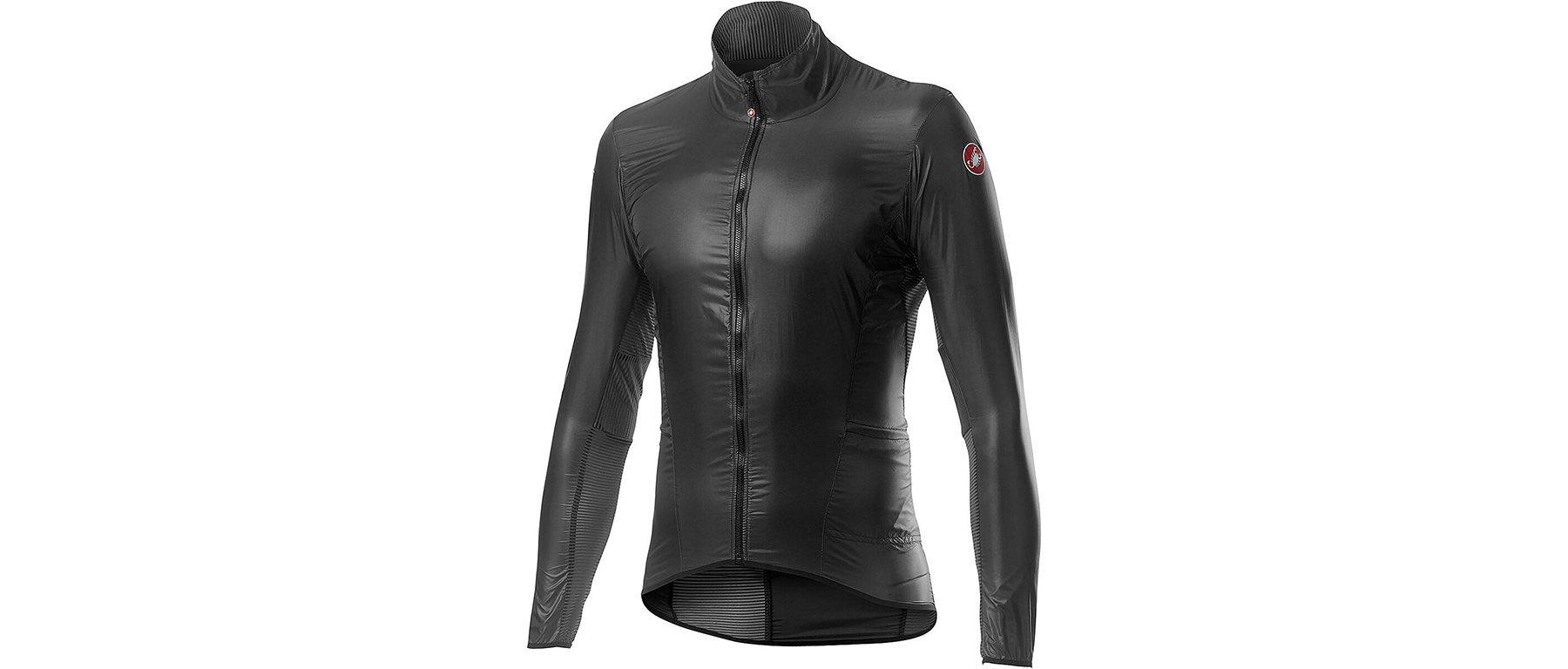
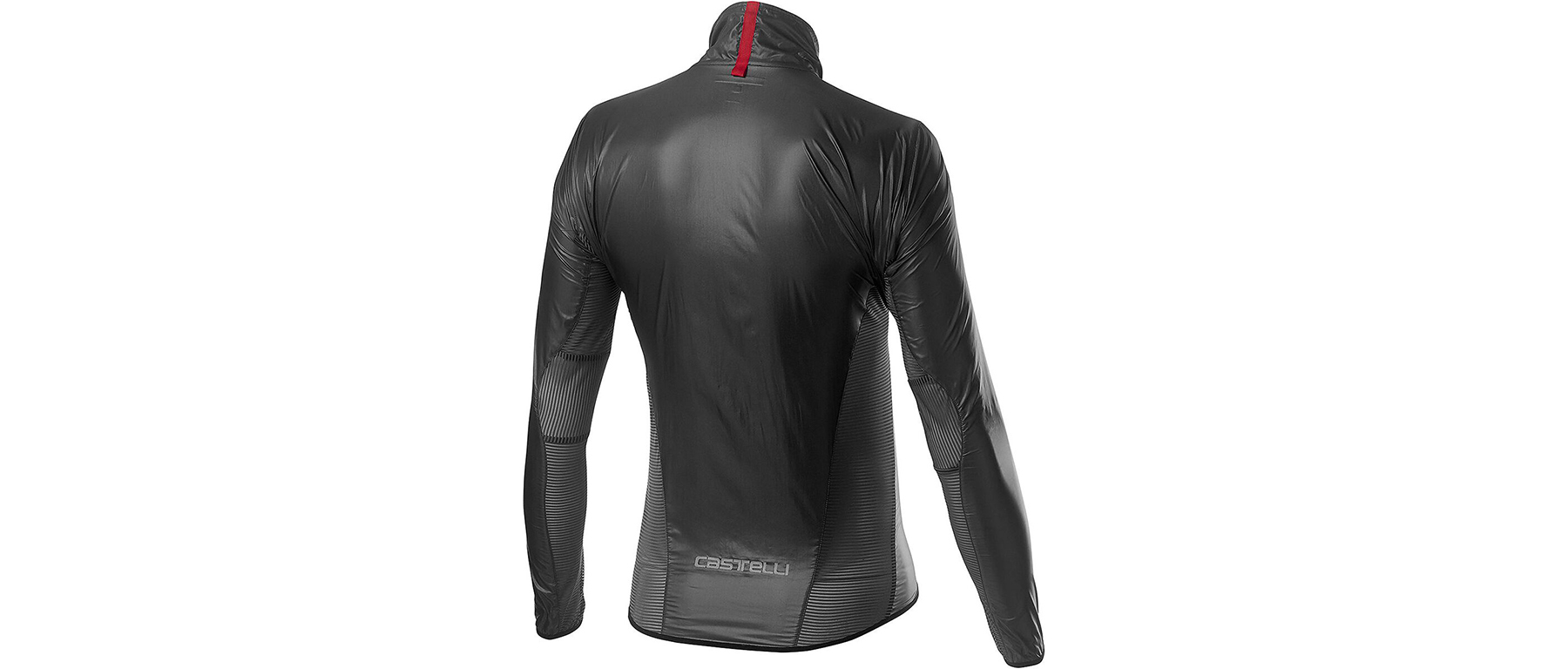
Packable wind jackets live or die by how small they stuff down and whether you'll actually bother carrying them. The Castelli Aria Shell Jacket answers both questions decisively—the whole thing compresses into its own rear pocket, creating a package small enough that you'll toss it in a jersey pocket without the usual mental negotiation about whether today's forecast really justifies the bulk. At 95 grams, this is the kind of jacket that stays with you on every ride from March through November because the weight penalty for being prepared is essentially nothing.
Castelli built the Aria around their Veil Flyweight fabric, a membrane that blocks wind while remaining permeable enough that you're not immediately cooking when the road tilts upward. This isn't a rain jacket—the DWR treatment sheds light spray and road mist, but sustained precipitation will eventually work through. What the Aria does exceptionally well is handle those early morning starts when the valley floor sits at 55 degrees and you need protection for the first hour before the sun does its job. The fabric maintains breathability at intensities where a standard wind shell would have you reaching for the zipper within ten minutes.
The cut runs distinctly aero, sitting close through the torso without the flapping you'll get from looser emergency shells. Castelli positions this as their most aerodynamic wind jacket, with a fit designed around a rider in the drops rather than someone standing upright at a fitting mirror. That performance orientation shows in the minimal rear pockets—there's the stuff sack pocket and that's it—and the overall construction that prioritizes packability and wind protection over storage versatility.... Read More
Reflective details on the Aria are subtle but functional, hitting the key visibility zones for low-light conditions without the look-at-me aesthetic of safety-focused gear. The full-length front zipper runs smoothly enough for one-handed operation when you need to dump heat on a climb, and the elasticated cuffs and hem seal out drafts without requiring adjustment. The collar sits high enough to protect your neck from wind chill on descents but doesn't bunch awkwardly when you're working hard.
For riders who've been burned by packable jackets that turn out to be neither adequately packable nor adequately jacket-like, the Aria represents Castelli's answer to both complaints. The Veil Flyweight fabric delivers legitimate wind blocking without the clammy microclimate issues that plague cheaper shells, and the compressed size actually matches what Castelli claims rather than requiring origami skills to recreate after the first use.